







With solar PV installations continuing to accelerate, Kevin Taylor, Training and Technical Support Manager at Marley, says that tenant safety is the key factor for every social housing solar PV project.
The growth of solar PV presents a significant opportunity for housing associations in efforts to reduce energy costs, improve building performance and accelerate the transition to a lower-carbon housing stock.
But as more installations are added to existing and new build homes, there is an equally important responsibility and that is ensuring the drive to decarbonise social housing does not come at the expense of tenant safety.
Consider from the start
For housing providers, fire performance, product compatibility and installation best practice should therefore be considered from the outset, rather than treated as an afterthought.
Government figures reveal that more than 170,000 solar panel installations have already taken place in the UK in 2026, taking the total number of installations beyond two million. This continued growth is being driven by energy costs, environmental considerations, and changes to building regulations, including the Future Homes Standard. For housing associations managing large and diverse property portfolios, however, increasing solar deployment also brings the need for robust consideration of safety, system compatibility, and long-term performance.
This means looking beyond individual products and asking a more fundamental question. Has the complete solar system been appropriately tested and certified for its intended application?
This is particularly important given evidence that the rate of solar panel fires is increasing faster than the rate of installations, with fires reportedly rising by 133% between 2022 and 2025.
Check out compatibility
One significant risk is associated with DC connections. Incorrect connections or cross-mating of connectors can create electrical arcs, with the potential for fire to spread behind panels and into the roof space. This reinforces the importance of considering the compatibility and fire performance of panels, mounting systems, flashings, and associated components as a complete system.
For social housing providers, this is ultimately about more than meeting compliance requirements. Tenants should be able to have confidence that renewable technology installed on their homes has been selected and installed with their safety in mind.
Appropriately qualified, MCS-accredited installers and MCS-approved products have a significant role to play. Where roof-integrated systems are specified, MCS certification also requires the mounting system to be used with modules specifically listed on its MCS 012 certificate and identified as having the appropriate fire classification for that mounting kit.
Seek out evidence
Importantly, certification of individual components does not automatically demonstrate that they have been tested and certified as a combination. Housing providers and their specification teams should therefore seek evidence of system-level testing and certification.
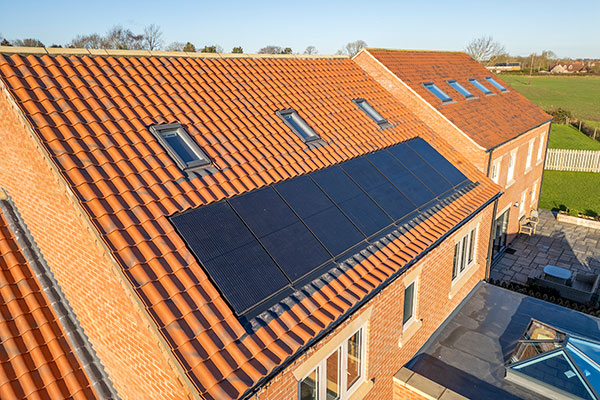
The Marley SolarTile® roof-integrated solar system has achieved the highest classification for resistance to the spread of flame and fire penetration in European fire safety tests (BRoof T1, T2, T3 and T4). Independent BBA Solar System certification covers the solar panels, solar flashings, and their combined system.
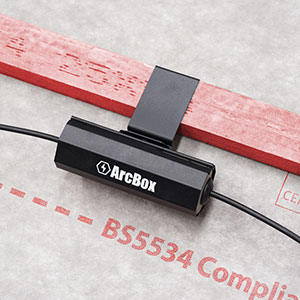
The solution also incorporates ArcBox, designed to enclose a DC connector and contain an electrical arc, helping prevent it from spreading to combustible materials around the installation.
As housing association providers accelerate their decarbonisation programmes, safety must remain fundamental to every project. Choosing compatible, tested, and certified systems is an important part of delivering the benefits of solar PV while protecting the people who matter most: the tenants living beneath it.
For more information, visit Marley’s website: www.marley.co.uk/solar-roof-tiles/solartile
Images © Marley
- Log in to post comments