












Aims & Objectives
As part of Stroud District Council’s maintenance programme, we safely removed asbestos insulating board (AIB) soffits from eight residential blocks comprising a mix of two and three-storey flats and houses. The project formed a key part of a wider refurbishment programme, enabling the Council’s framework contractor to replace the roofline systems immediately after the asbestos removal works.

Success relied on detailed planning, effective communication and close collaboration between all contractors. Our objective was to complete the works safely, efficiently and on programme while minimising disruption to residents and allowing follow-on trades to begin without delay.
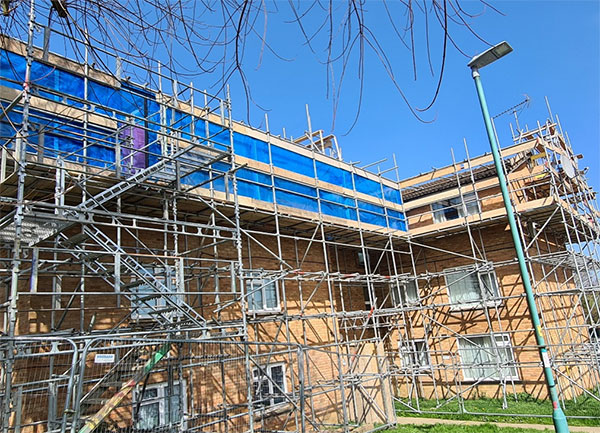
Close coordination with the appointed scaffolding contractor was essential. Scaffold designs were developed to accommodate our enclosures, provide safe staircase access and create efficient working conditions for our operatives. The scaffold programme was fully aligned with our method statements, risk assessments and Plans of Work to ensure every phase was delivered safely.
All asbestos removal was undertaken within fully controlled enclosures in accordance with current legislation and industry best practice. Each work area was completed, thoroughly cleaned and independently air tested on the same day, ensuring no live work areas remained overnight. This maintained the highest safety standards while allowing the roofing contractor to begin replacement works immediately following clearance certification.
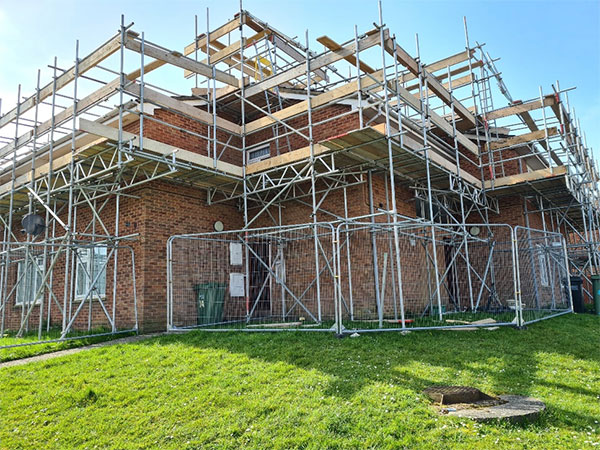
Independent air monitoring formed an integral part of the project. Initially, we appointed the analytical company before the client transferred responsibility to their own term consultant. At the client’s request, we continued to coordinate analytical bookings and liaise directly with the consultant, ensuring the programme remained on schedule. The use of independent UKAS-accredited analysts provided assurance that every area met the required clearance standards before handover.
Implementation
Comprehensive pre-start meetings were held with the client, scaffolding contractor and project stakeholders to agree programme requirements, responsibilities and timescales. Once the programme was finalised, our Health and Safety team prepared all statutory documentation, including risk assessments, method statements, drawings and the ASB5 notification submitted to the Health and Safety Executive (HSE).
Cost certainty remained a priority throughout the project. Detailed site surveys measured all soffit areas before work commenced, enabling accurate pricing using the agreed tender rates. These costs were verified with the client and formed the basis of monthly valuations. As the project was fully scoped from the outset and our close working relationship with the scaffolding contractor ensured the agreed methodology was followed, the original budget remained accurate with no unexpected variations. Regular commercial inspections ensured programme and cost control were maintained throughout.
Resident engagement was equally important. Working alongside Stroud Council’s Community Liaison Officer (CLO), we supported resident communications throughout the programme. Before work commenced, we attended a public meeting organised by the Council to explain the asbestos removal process, outline the safety measures being implemented and answer residents’ questions. This proactive approach reassured occupants and helped build confidence in the project.
Communication continued through weekly progress meetings with our site supervisors and the client, supported by monthly management reviews. Our senior management also carried out regular site visits and unannounced safety audits to ensure the highest standards of compliance and workmanship.
Outcomes
On completion, a comprehensive handover pack was provided containing site diaries, completed Plans of Work, clearance certification and independent air monitoring reports. A final joint inspection with the client and other contractors confirmed that all objectives had been achieved before the roofing replacement programme commenced.
The project was completed safely, on programme and within the agreed budget, with no asbestos-related variations or additional costs. Thorough planning, effective cost management, proactive resident engagement and strong communication between all stakeholders ensured a successful outcome for both the client and residents.
The collaborative approach adopted throughout the programme continues to provide a proven model for the successful delivery of future asbestos remediation projects.
Together, we can help keep homes safe, communities strong and residents protected.
For more information about our specialist environmental services, visit www.envirocall.co.uk/ha-mag
- Log in to post comments